Read more at: https://www.deshabhimani.com/dbi-special-weekly/short-story-19149/thankaneelam-short-story-by-suresh-kumar-v-71066

കേരളത്തിലെ പത്തനംതിട്ട ജില്ലയിലെ പമ്പാ നദിക്കരയിൽ നടക്കുന്ന ചെറുകോൽപ്പുഴ ഹിന്ദു മഹാസമ്മേളനത്തിന്റെ ഭാഗമായി ബുധനാഴ്ച നടക്കുന്ന 'ഹിന്ദു ഐക്യ സമ്മേളനം' ഉദ്ഘാടനം ചെയ്തുകൊണ്ട് ഭഗവത് പറഞ്ഞു, "ധർമ്മം" ഹിന്ദുമതത്തിന്റെ ആത്മാവാണെന്നും എല്ലാവരും അത് വ്യക്തിപരമായി ആചരിക്കണമെന്നും. ഓരോ കുടുംബവും ആഴ്ചയിൽ ഒരിക്കലെങ്കിലും ഒത്തുകൂടി അവരുടെ നിലവിലെ ജീവിതശൈലി പാരമ്പര്യവുമായി പൊരുത്തപ്പെടുന്നുണ്ടോ എന്ന് പ്രാർത്ഥിക്കണമെന്നും ചർച്ച ചെയ്യണമെന്നും അദ്ദേഹം കൂട്ടിച്ചേർത്തു.
ഹിന്ദു സമൂഹം അതിന്റെ നിലനിൽപ്പിനായി ഒന്നിക്കണമെന്നും ഒരു സമൂഹമായി സ്വയം ശക്തിപ്പെടുത്തണമെന്നും ഭഗവത് പറഞ്ഞു. "എന്നാൽ ശക്തിപ്പെടുത്തലിന് അതിന്റേതായ ഭയങ്ങളുണ്ട്. ശക്തിയും അത് ഉപയോഗിക്കുന്ന രീതിയും പ്രധാനമാണ്. അത് മറ്റാർക്കും ദോഷം വരുത്തരുത്." ലോകമെമ്പാടുമുള്ള സംഘർഷങ്ങൾക്ക് കാരണം മതമാണെന്നും, പലരും തങ്ങളുടെ മതവും വിശ്വാസങ്ങളുമാണ് ഏറ്റവും ഉയർന്നതെന്ന് കരുതുന്നുണ്ടെന്നും അദ്ദേഹം കൂട്ടിച്ചേർത്തു. ഐക്യം ആവശ്യപ്പെടുന്ന സനാതന ധർമ്മം പിന്തുടരുന്നതിനാൽ ഹിന്ദുമതം വ്യത്യസ്തമാണെന്നും അദ്ദേഹം പറഞ്ഞു.
"ചട്ടങ്ങൾ പാലിച്ചുകൊണ്ടാണ് ധർമ്മം ആചരിക്കേണ്ടത്. നിയമങ്ങളുടെ പരിധിക്ക് പുറത്തുള്ള ഏതെങ്കിലും ആചാരങ്ങൾ ഉണ്ടെങ്കിൽ അവ നിർത്തലാക്കണം. ഗുരു (ശ്രീ നാരായണ ഗുരു) പറയുന്നതുപോലെ, ജാതീയതയും തൊട്ടുകൂടായ്മയും ധർമ്മമല്ല. അവ നിർത്തലാക്കണം," ആർഎസ്എസ് മേധാവി പറഞ്ഞു.
കേരളം ആസ്ഥാനമായുള്ള ഹിന്ദുമാതാ മഹാമണ്ഡലം എന്ന സംഘടനയാണ് ചെറുകോൽപ്പുഴ ഹിന്ദു കൺവെൻഷൻ സംഘടിപ്പിക്കുന്നത്. തൊട്ടുകൂടായ്മയ്ക്കെതിരെ പോരാടുന്നതിനുള്ള ഒരു പരിഷ്കരണവാദ സംഘടനയായി 1913-ൽ ചട്ടമ്പി സ്വാമികളാണ് ഈ സംഘടനയെ സങ്കൽപ്പിച്ചത്. പരമ്പരാഗതവും ആചാരപരവുമായ ആചാരങ്ങളുമായി ബന്ധപ്പെട്ട് ഹിന്ദു മതത്തിൽ പരിഷ്കരണം, സ്ത്രീകളുടെയും അരികുവൽക്കരിക്കപ്പെട്ട സമൂഹങ്ങളുടെയും ശാക്തീകരണം എന്നിവയ്ക്കായി സ്വാമികൾ ശ്രമിച്ചു.
ഈ വർഷത്തെ പരിപാടിയുടെ 113-ാമത് പതിപ്പാണിത്. ഞായറാഴ്ച കേരള ജലവിഭവ മന്ത്രി റോഷി അഗസ്റ്റിൻ, പത്തനംതിട്ട എംപി ആന്റോ ആന്റണി, കേരള നിയമസഭയിലെ പ്രതിപക്ഷ നേതാവ് വി.ഡി. സതീശൻ എന്നിവരുടെ സാന്നിധ്യത്തിൽ കേരള ഗവർണർ രാജേന്ദ്ര അർലേക്കർ ഉദ്ഘാടനം ചെയ്തു. ഭഗവത് കൺവെൻഷനിൽ പങ്കെടുക്കുന്നത് സംഘടനയ്ക്ക് ഒരു പദവിയാണെന്ന് ഹിന്ദുമത മഹാമണ്ഡലത്തിന്റെ വൈസ് പ്രസിഡന്റ് അഭിഭാഷകൻ കെ. ഹരിദാസ് പറഞ്ഞു.
ഇതും വായിക്കുക
The Supreme Court today(January 22) reserved the order in a Special Leave Petition challenging the High Court of Chattisgarh's order dated January 9, 2025, whereby, the Court rejected the petitioner's plea to bury his father, who was a Christian pastor, in the Chindwara village graveyard.
During the hearing, the Supreme Court said that utmost importance must be given to the right of decent burial to the dead and therefore, it wants the matter to be settled amicably.
Today, Solicitor General Tushar Mehta, appearing for the State of Chattishgarh along with the State's Advocate General filed a new affidavit and emphasised its arguments made in the last proceedings that the burial should take place in the designated area for the Christian Tribals, which is about 20-30 kilometers away from the present village. He argued that it is a matter of public order for the State and therefore, it has to be handled sensitively. However, a bench of Justices BV Nagarathna and Satish Chandra Sharma questioned how all of sudden there are objections from the Hindu Tribals when for years nobody raised objections to the burial of Christian Tribals and Hindu Tribals together.
Justice Nagarathna remarked that the objections by "so-called" villagers are a "new phenomenon". Senior Advocate Colin Gonsalves, for the petitioner, took the Court through revenue maps and argued that there are many cases where the Christian Tribals have been buried in the village itself. He answered that this case is treated differently because the person was converted. He took the Court through the counter-affidavit filed by the State and pointed out that the State has honestly accepted the argument that a converted person will not be allowed to be buried in the village.
Gonsalves argued that this is "patent discrimination" which has resulted in "communalism" of the dead person.
When Justice Nagarathan suggested that the alternative prayer of the petitioner to bury his father in his own private land could be considered, Mehta objected to it and stated that burials can take place only at the designated places. He pressed that the person be buried in the Karkapal village(different from the native village) with proper Christian rites and the State will provide ambulance and police protection. However, Gonsalves rejected this argument and he emphasised that the petitioner will bury his father where their ancestors have been buried. He warned that if anything else is allowed otherwise, it will set the beginning of such cases where Dalit persons, if converted, will not be allowed to bury the body in their village.
On January 20, the Court briefly heard the matter and expressed that it is pained by the fact that the State and the High Court have been unable to resolve the issue and that the man was forced to come to the Supreme Court to bury his father. It also called out the Chattisgarh High Court for taking shelter of public order and not being able to pass an appropriate order to resolve the issue.
Brief background
As per the petition, the petitioner is a Tribal Christian. His father died on January 7 due to prolonged illness and old age illness after which, their family wanted to hold the last rites and bury his mortal in the area specified for Christians in the village graveyard. As per the SLP, some villagers aggressively objected to it and threatened them with dire consequences if the petitioner carried out the burial in the village graveyard.
When the villagers turned violent, the petitioner's family made a report to the police however the police exerted pressure on them to take the body out of the village. As a result of which, the body has been lying in the mortuary since January 7.
"The petitioner, village Chhindawada has a graveyard orally allotted by the traditional Gram Panchayat for burial/cremation of dead bodies. In this village, there are separate graveyards for Tribals and other Castes (Mahra). The separate areas are earmarked for the burial/cremation of persons belonging to the Hindu religion and for persons belonging to the Christian community in the graveyard of Mahar Caste. In the area specified for Christians, the petitioner's Aunt---- & Grandfather --- have been buried in the said village graveyard," the plea states.
As per the High Court, there is no separate burial ground for the Christians in the Chhindawala village but a separate burial ground is available for them in village Karkapal, which is situated at a distance of 20-25 km. It observed: "considering the fact that burial ground/graveyard of Christian community is available in nearby area, it will not be proper to grant relief as sought for by petitioner in this writ petition, which may cause unrest and disharmony in the public at large.”
On January 17, a bench of Justices B.V. Nagarathna and Satish Chandra Sharma issued notice to the State of Chhattisgarh.
A recap of previous hearing
On January 20, Mehta, for the State, stated that the body could be buried at the State's expense but 20 km outside the village where there is a burial ground for Christians. Mehta clarified that the village burial ground is only for Hindu tribals as per their rituals. He claimed that this position is supported by statutory rules. He further argued that the issue should not be decided on "emotions" as the intention is to make this a precedent to be followed throughout India. He added that this is an "Article 25 matter" and would be subjected to public order.
As per the State's counter affidavit filed in this case, any person who has foresworn the traditions of the community or has converted into a Christian is not allowed to be buried in the village graveyard.
However, Justice Nagarathna questioned why a person who has lived in a village not be buried there. She also questioned why for so long, no objection was raised against those Christian tribals that have been buried. Alternatively, she pointed out that the petitioner may be allowed to bury his father in his own private land. This too was opposed by Mehta stating that is prohibited because after burial, the "character of land" becomes "sacred".
Gonsalves stated that the State's counter-affidavit makes it clear that they have admitted the fact that the petitioner's relatives were buried in the village graveyard. He also showed the photos where his relatives were buried but with a 'cross' mark in the village graveyard. He added that the real issue is that the person was converted.
While Gonsalves accused the State is trying to "break with the tradition of secularism," Mehta claimed that they want to "start [this practice] at all India level" so that there is disturbance between "tribals who have converted and tribal who have not converted." Against this, Gonsalves responded that there are "communal elements" trying to create disturbance and stated that this in infact a movement "kick Christians away". Gonsalves added that a "very dangerous precedent" is being laid that "if you convert, you will have to go out of the village".
While the arguments between Gonsalves and Mehta continued, the Court expressed its concern about the lack of dignity afforded to a dead man. She said: "Mr. Solicitor, we are very sorry a man has to come to the Supreme Court to have his father [buried]. We are sorry to say, neither the Panchayat nor the State Government and either the High Court has [been] able to resolve this problem. And the High Court taking shelter and saying there would be law and order problem. We are pained by that. If the [High] Court and the State cannot resolve such a matter..We are pained for this person had to come to the Supreme Court to get his father buried."
Case Details: RAMESH BAGHEL v. STATE OF CHHATTISGARH AND ORS., SLP(C) No. 1399/2025
Appearances: Senior Advocate Colin Gonsalves and Advocate Umesh Kumar
https://www.livelaw.in/top-stories/we-want-decent-burial-amicable-settlement-supreme-court-reserves-judgment-on-christian-mans-plea-to-bury-father-in-chhattisgarh-village-281639

After split verdict, SC orders officials to bury pastor in designated graveyard
Two judges on a Division Bench of the Supreme Court were on Monday un
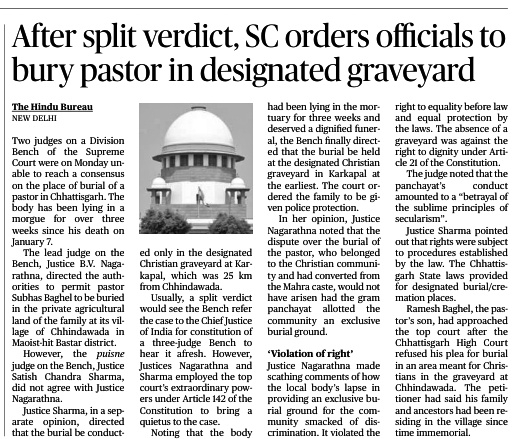
The lead judge on the Bench, Justice B.V. Nagarathna, directed the authorities to permit pastor Subhas Baghel to be buried in the private agricultural land of the family at its village of Chhindawada in Maoist-hit Bastar district.
However, the puisne judge on the Bench, Justice Satish Chandra Sharma, did not agree with Justice Nagarathna.
Justice Sharma, in a separate opinion, directed that the burial be conducted only in the designated Christian graveyard at Karkapal, which was 25 km from Chhindawada.
Usually, a split verdict would see the Bench refer the case to the Chief Justice of India for constitution of a three-judge Bench to hear it afresh. However, Justices Nagarathna and Sharma employed the top court’s extraordinary powers under Article 142 of the Constitution to bring a quietus to the case.
Noting that the body had been lying in the mortuary for three weeks and deserved a dignified funeral, the Bench finally directed that the burial be held at the designated Christian graveyard in Karkapal at the earliest. The court ordered the family to be given police protection.
In her opinion, Justice Nagarathna noted that the dispute over the burial of the pastor, who belonged to the Christian community and had converted from the Mahra caste, would not have arisen had the gram panchayat allotted the community an exclusive burial ground.
‘Violation of right’
Justice Nagarathna made scathing comments of how the local body’s lapse in providing an exclusive burial ground for the community smacked of discrimination. It violated the right to equality before law and equal protection by the laws. The absence of a graveyard was against the right to dignity under Article 21 of the Constitution.
The judge noted that the panchayat’s conduct amounted to a “betrayal of the sublime principles of secularism”.
Justice Sharma pointed out that rights were subject to procedures established by the law. The Chhattisgarh State laws provided for designated burial/cremation places.
Ramesh Baghel, the pastor’s son, had approached the top court after the Chhattisgarh High Court refused his plea for burial in an area meant for Christians in the graveyard at Chhindawada. The petitioner had said his family and ancestors had been residing in the village since time immemorial.
Kerala High Court held that a “Diocese is not entitled to claim compensation for the death of a deceased priest.”
Justice C. Pratheep Kumar made this observation in an appeal filed by the insurance company against the grant of insurance money to the Diocese over the death of a priest from road accident. The deceased was travelling in a motor bike when he was hit by a lorry and succumbed to the injuries.
The lorry had a valid insurance coverage. The Motor Accidents Claims Tribunal awarded a compensation of Rs. 13,19,000. Against this the appeal was filed.
The original case was filed by a priest of St. Joseph Capuchian Provincialate on behalf of the Provincialate. The deceased was the member of the same provincialate.
The insurance company argued that the Provincialate cannot be considered as the legal representative of the deceased and therefore the clam filed on behalf of the Provincialate is not maintainable.
The petitioner relied on the Supreme Court decision in Jayasree N. and Others v Cholamandalam MS General Insurance Company Ltd. (2021) where the Court had observed that the Supreme Court in an earlier decision in Montford Brothers of St. Gabriel and Another v United India Insurance and Another (2014) had allowed a society to claim compensation for the death of a 'brother' of the society. This argument was refuted by the appellant saying that there was no such observation in Montford Brothers.
The High Court held after going through that the judgment in Montford Brothers held that the Supreme Court did not adjudicate on the issue whether the charitable society can represent the 'brother'. The High Court held that the observations of the Supreme Court in this issue can be considered only as an obiter.
The High Court relied on the Division Bench decision of the Court in Msgr Xavier Chullickal v C. G. Raphael (2017) where it was held that a Christian priest is governed by Indian Succession Act and he can receive and alienate property in his name. It was also held in that case that the Indian Succession Act had an overriding effect over canon laws/ personal laws.
The Appeal was accordingly allowed.
Counsel for the Appellants: Adv. VPK. Panicker
Counsel for the Respondents: Adv. S. Sachithananda Pai
Case No: MACA 3957 of 2015
Case Title: The New India Insurance Co. Ltd. v Fr. Mathew Paikada
Citation: 2025 LiveLaw (Ker) 39
https://www.livelaw.in/high-court/kerala-high-court/kerala-high-court-diocese-priest-insurance-claim-281433

